Best Premium Pillows for Neck Pain
A pillow can make a beautifully appointed bed look complete, but if you wake with stiffness at the base of your neck or tension across your shoulders, appearance quickly stops mattering. The best premium pillows for neck pain earn their place through something more demanding than style alone - precise support, thoughtful materials, and a feel that stays consistent night after night.
In the luxury sleep category, the difference is rarely about softness versus firmness in the simplest sense. It is about alignment. A premium pillow should support the natural curve of the cervical spine, cushion pressure points, and hold its shape without feeling hard or uninviting. That balance is where neck comfort begins.
What sets the best premium pillows for neck pain apart
Neck pain is often aggravated by poor posture during sleep rather than by a pillow that feels obviously uncomfortable in the moment. Many sleepers choose something plush and indulgent, only to find that their head sinks too far or tilts at an awkward angle for hours at a time. A truly well-made pillow corrects this quietly.
The best premium pillows for neck pain tend to stand out in four areas: material integrity, shape retention, pressure relief, and tailored loft. In a premium construction, fills are more responsive, covers are more breathable, and the overall finish is designed to perform over time rather than flatten after a few months. You are not simply paying for a label. You are investing in consistency, refinement, and support that remains dependable.
There is, however, no single perfect pillow for every sleeper. The right choice depends on your sleep position, shoulder width, mattress feel, and how much contouring you prefer around the head and neck. This is where curation matters more than chasing trends.
How to choose a premium pillow when neck pain is the issue
The first question is how you sleep most of the night, not how you fall asleep for five minutes. Side sleepers usually need a higher loft to fill the space between the shoulder and the head. Back sleepers generally benefit from a medium loft that supports the neck without pushing the head too far forward. Stomach sleepers, especially those with ongoing neck tension, often need a very low-profile pillow or may benefit from changing position altogether.
Mattress feel matters just as much. On a plush mattress, your body sinks more deeply, so the pillow often needs slightly less height. On a firmer mattress, you may need more loft to maintain even alignment. Many shoppers overlook this relationship and judge the pillow in isolation, when in reality it works as part of a complete sleep system.
Material choice also shapes the experience. Gel-based and technical foam pillows often provide more structured contouring and pressure distribution. Down and down-alternative designs can feel sumptuous, but they vary widely in how well they hold the neck in position. Some luxury sleepers prefer adjustable fills because they allow fine-tuning. Others want a fully engineered shape that removes guesswork.
Premium pillow materials and what they feel like
Technical gel is one of the most compelling options for neck pain because it combines cushioning with a distinct sense of buoyant support. It does not collapse in the way many conventional pillows do, and it can create a cradled feel that reduces pressure while keeping the head aligned. For sleepers who want precision and a cleaner, more sculpted sleep surface, this category often feels especially elevated.
High-performance memory foam can also work beautifully, provided it is not overly dense or heat-retentive. The best versions contour gradually and recover their form reliably. They suit sleepers who like a stable, held-in-place sensation. The trade-off is that some people find deep contouring too restrictive if they shift positions frequently.
Natural down remains the benchmark for softness and luxury hand-feel, but it is not automatically the best answer for neck pain. In premium constructions, down can be paired with supportive inner chambers that offer more structure than a traditional soft pillow. That hybrid approach is often more successful for neck comfort than pure softness alone.
Down alternative fills, when well executed, offer a polished hotel-like comfort with easier care and a more consistent shape. They can be an excellent choice for sleepers who want plushness with a touch more resilience. Still, if your neck pain is persistent or posture-related, these pillows may need to be chosen very carefully to avoid excess sink.
The best pillow profile for each sleep position
Side sleepers
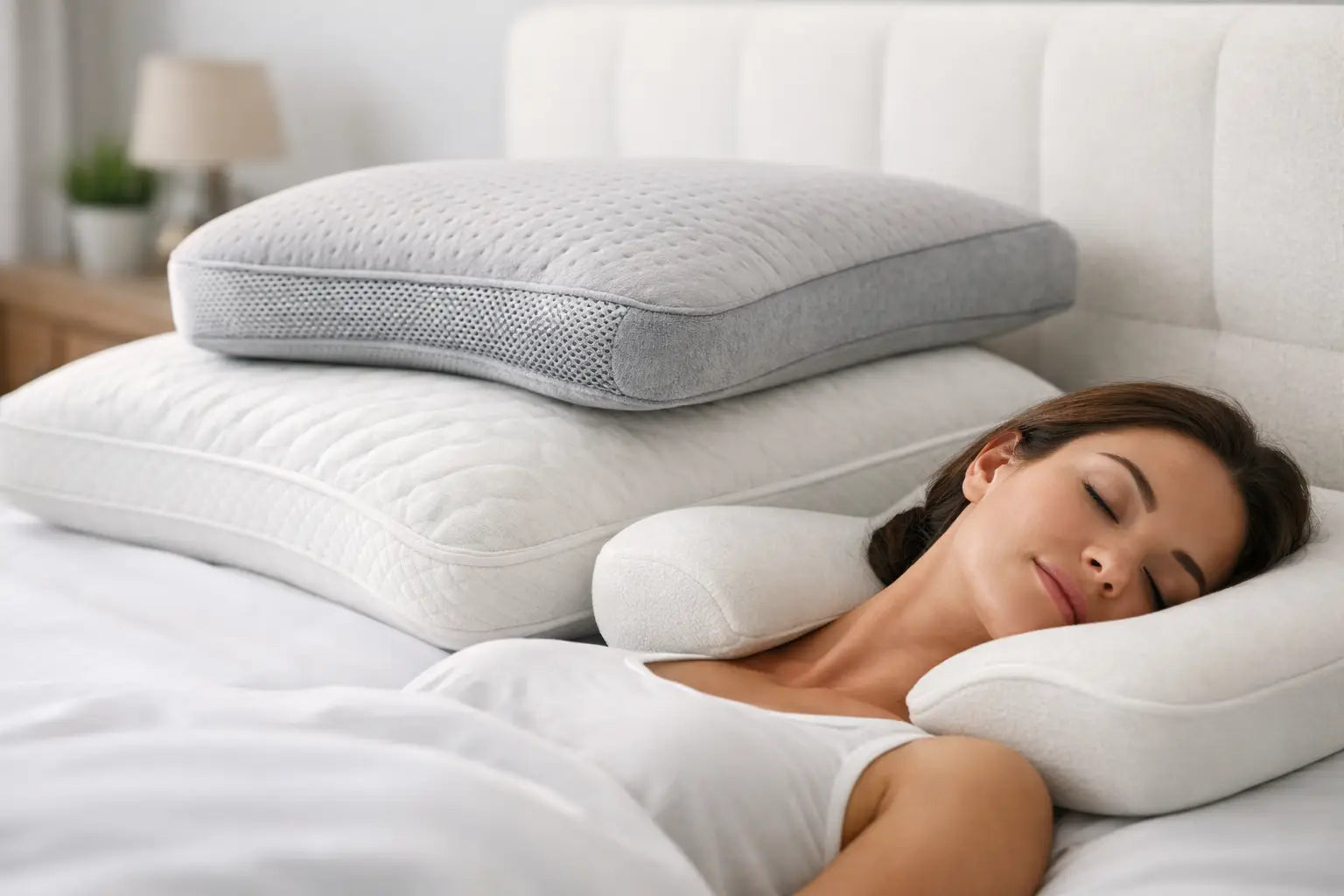
Side sleepers usually need the most deliberate support. A premium pillow for side sleeping should keep the head level with the spine, not angled down toward the mattress. Look for medium-firm to firm support and a loft substantial enough to bridge shoulder width. This is where engineered designs and shape-retentive materials tend to outperform softer, flatter fills.
If you sleep on your side and use a pillow mainly for softness, neck pain often becomes a predictable result. The more refined option is a pillow that feels inviting on the surface but remains structurally supportive underneath.
Back sleepers
Back sleepers typically do best with a medium loft and gentle contour. The aim is to support the neck’s natural curve while keeping the chin from dropping toward the chest. Technical pillows with a subtle ergonomic shape can be especially effective here, particularly for those who alternate between back sleeping and light side sleeping.
Too much height is a common mistake. In the premium category, comfort should feel effortless, not propped up.
Combination sleepers
Combination sleepers need versatility. If you move between side and back sleeping, an adaptable pillow with responsive support is often the best choice. Adjustable designs can be useful, but so can premium gel or foam models that compress enough for one position while still offering enough lift for another.
This is a category where trying to satisfy every possible preference can lead to a pillow that does nothing especially well. The smarter approach is to identify your dominant position and buy with that in mind.
Why luxury construction matters for neck support
A pillow may feel excellent in a showroom or during the first week at home, but what matters is how it performs after repeated use. Premium construction shows itself in durability. Better materials resist flattening, bunching, and uneven compression. Covers are more breathable and finely finished. Inner components are engineered to distribute pressure more evenly.
For neck pain, that long-term consistency is not a minor detail. If the fill shifts every night or the loft declines quickly, your alignment changes with it. A premium pillow is valuable because it delivers comfort with repeatability, not because it is merely softer or more expensive.
This is also where craftsmanship and brand heritage carry real weight. Established premium sleep brands tend to invest more deeply in testing, material quality, and ergonomic performance. For shoppers furnishing a refined bedroom, that technical credibility pairs naturally with elevated aesthetics.
When a softer pillow is not the better pillow
Luxury often gets mistaken for plushness. In reality, the most sophisticated sleep products are designed around performance as much as indulgence. A very soft pillow can feel exquisite at first touch, yet still leave the neck unsupported by morning.
That does not mean firm is always better. It means the right pillow should feel balanced. It should welcome the head, support the neck, and maintain that support without constant fluffing or repositioning. If you have broad shoulders, a pillow that feels modestly firm may actually feel more comfortable over a full night than one that initially seems cloud-like.
The same logic applies to visual styling. A beautifully dressed bed deserves pillows with presence and refinement, but the pillow you sleep on should first earn its role as a functional part of your wellness routine.
Shopping for the best premium pillows for neck pain with confidence
When evaluating premium pillows, think beyond marketing terms like cooling, plush, or orthopedic. Ask whether the pillow suits your sleep position, whether the material keeps its shape, and whether the loft works with your mattress. These are the details that influence neck comfort most.
It is also worth thinking about your bedroom more holistically. A pillow performs best when paired with a mattress and bedding that support restorative sleep as a complete experience. For many discerning shoppers, that is the appeal of a curated luxury retailer such as Sleeping Plaza - the ability to compare exceptional brands within a more considered sleep environment rather than piecing together isolated purchases.
Neck pain can have many causes, and a pillow is not a cure-all. But the right premium pillow can remove one of the most common nightly triggers: poor alignment sustained for hours at a time. Choose one that respects both your body and your standards, and your bed begins to feel less like a display and more like the restorative retreat it should be.
A well-chosen pillow is a quiet luxury. You notice it less in the moment, and more in the ease of waking up without that familiar ache.